The Problem
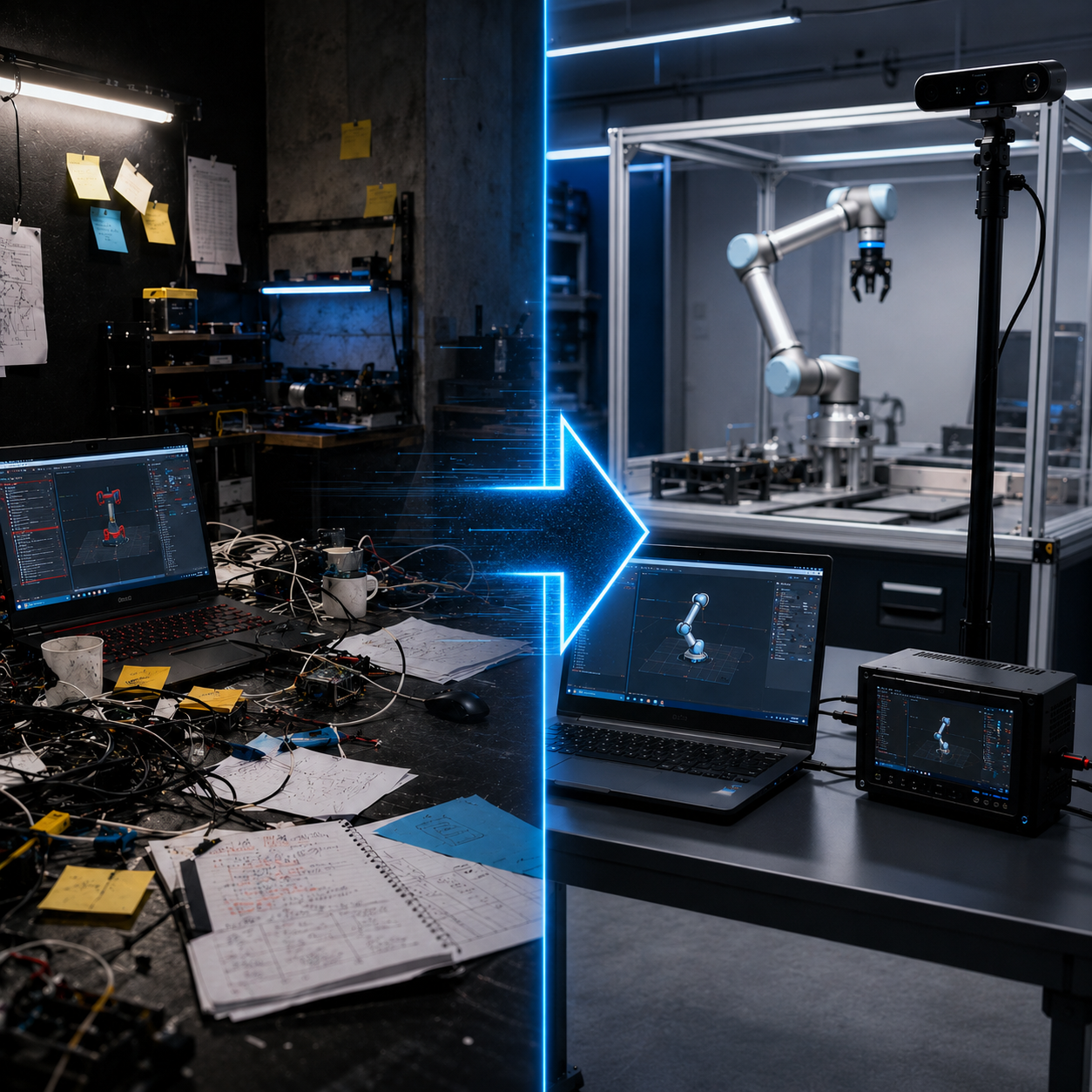
Robotics development gets messy fast.
You install ROS2, Gazebo, MoveIt, camera drivers, Python packages, C++ libraries, or Jetson dependencies — and suddenly your environment becomes fragile.
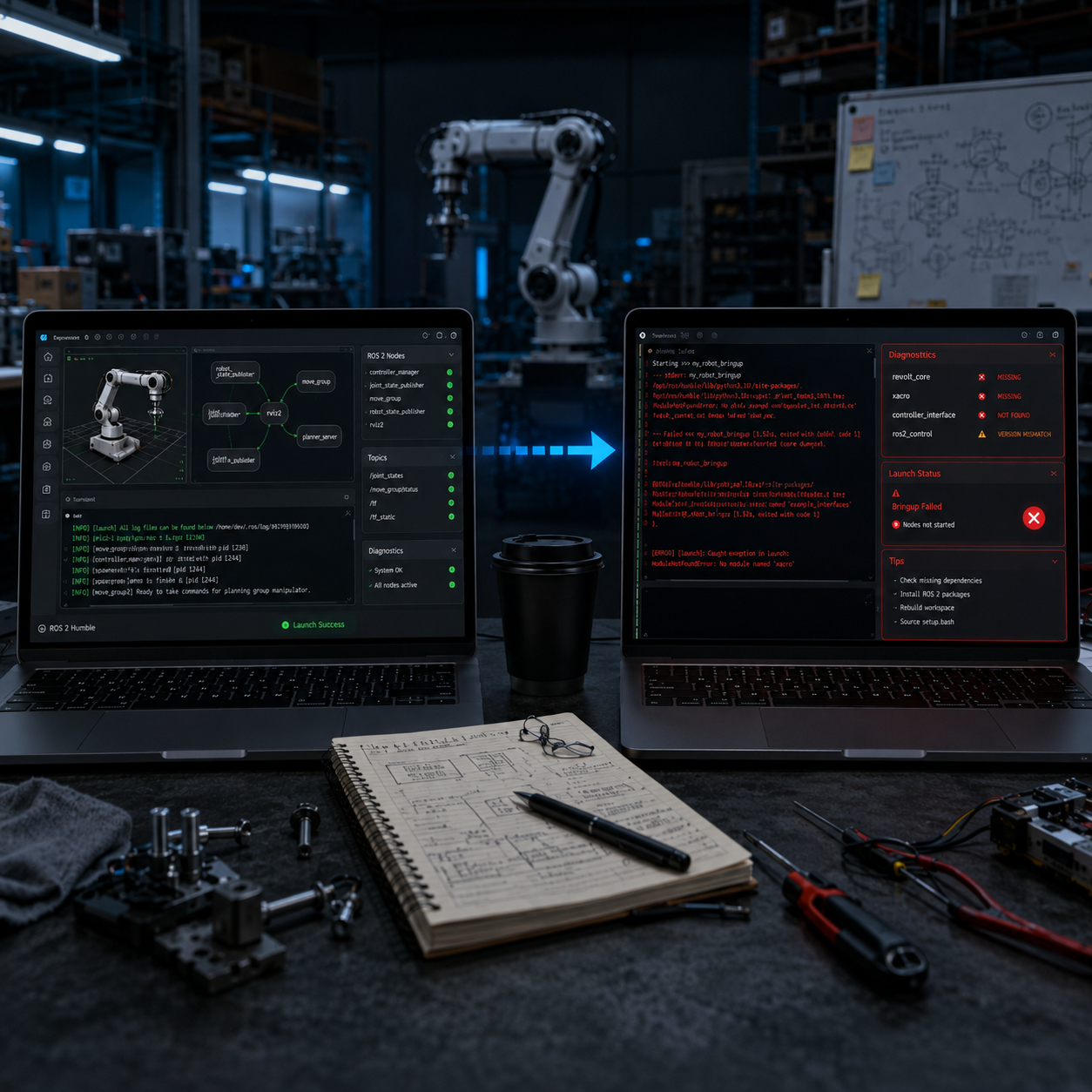
One update breaks your workspace.
One missing library blocks your build.
One tutorial works on another machine, but not on yours.
This is where Docker becomes essential.
- Broken dependencies after installing new robotics packages
- Projects that only work on one machine
- Messy Ubuntu setups full of conflicting libraries
- Hours lost fixing environments instead of building robots
- No clean workflow for simulation, hardware, and deployment
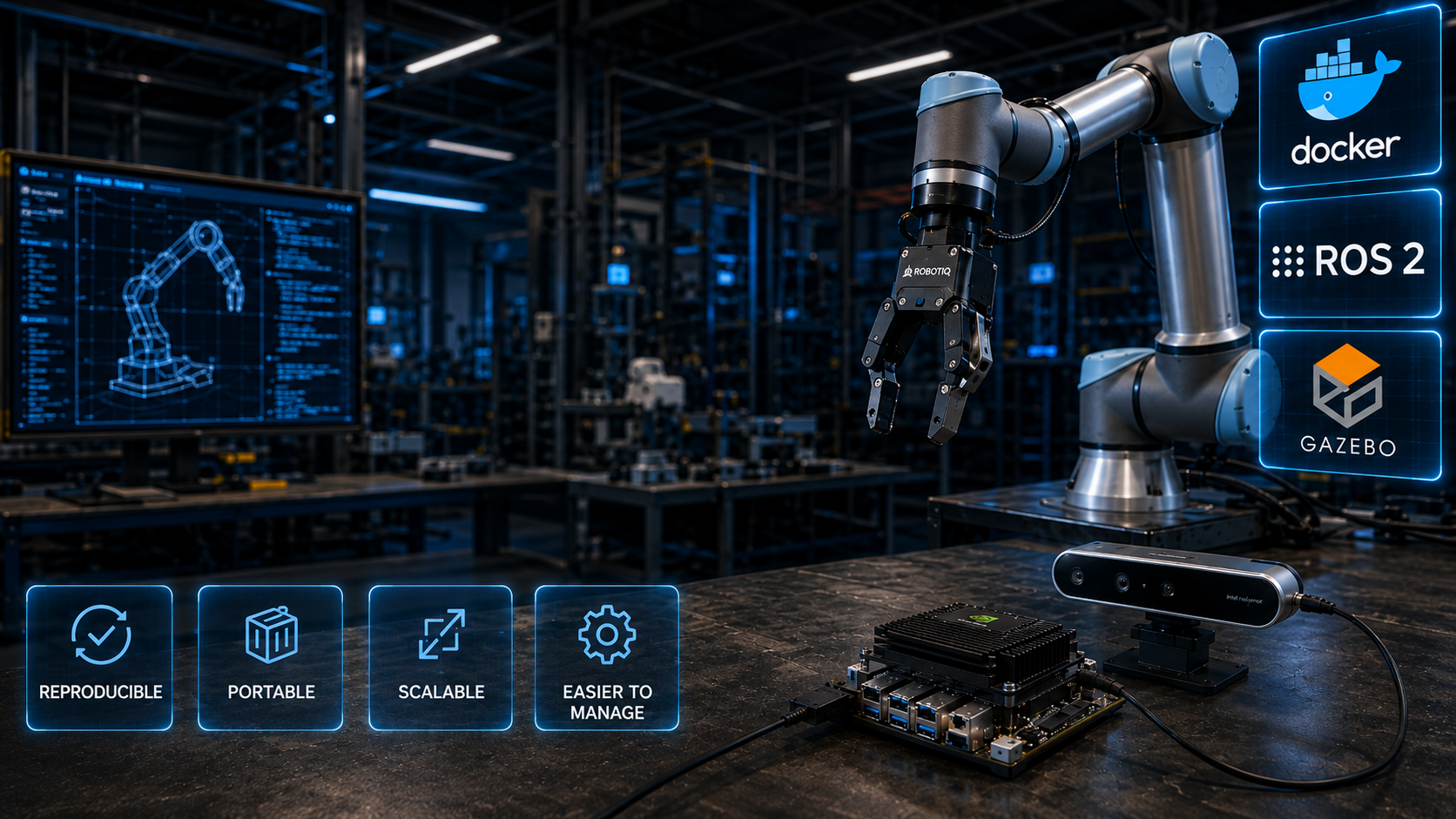
Docker helps you build clean, controlled, and reproducible robotics environments.
Why Docker for Robotics
Docker gives your robotics project a clean, controlled environment that can be rebuilt and reused.
Instead of installing everything directly on your main Ubuntu system, you define your setup once inside a Docker image: ROS2, dependencies, tools, libraries, drivers, and configuration.
Then you can run the same environment on another machine without starting from zero.
- Build reproducible ROS & ROS2 environments
- Avoid breaking your main Ubuntu installation
- Move projects between computers more easily
- Keep simulation, drivers, and tools organized
- Create a cleaner path from development to deployment
Docker does not replace ROS2.
It gives ROS2 a more reliable foundation to run on.
Who This Course Is For
This course is for you if you are learning ROS or ROS2 and you are tired of fighting your development environment.
You follow tutorials, install packages, build workspaces… and something always breaks.
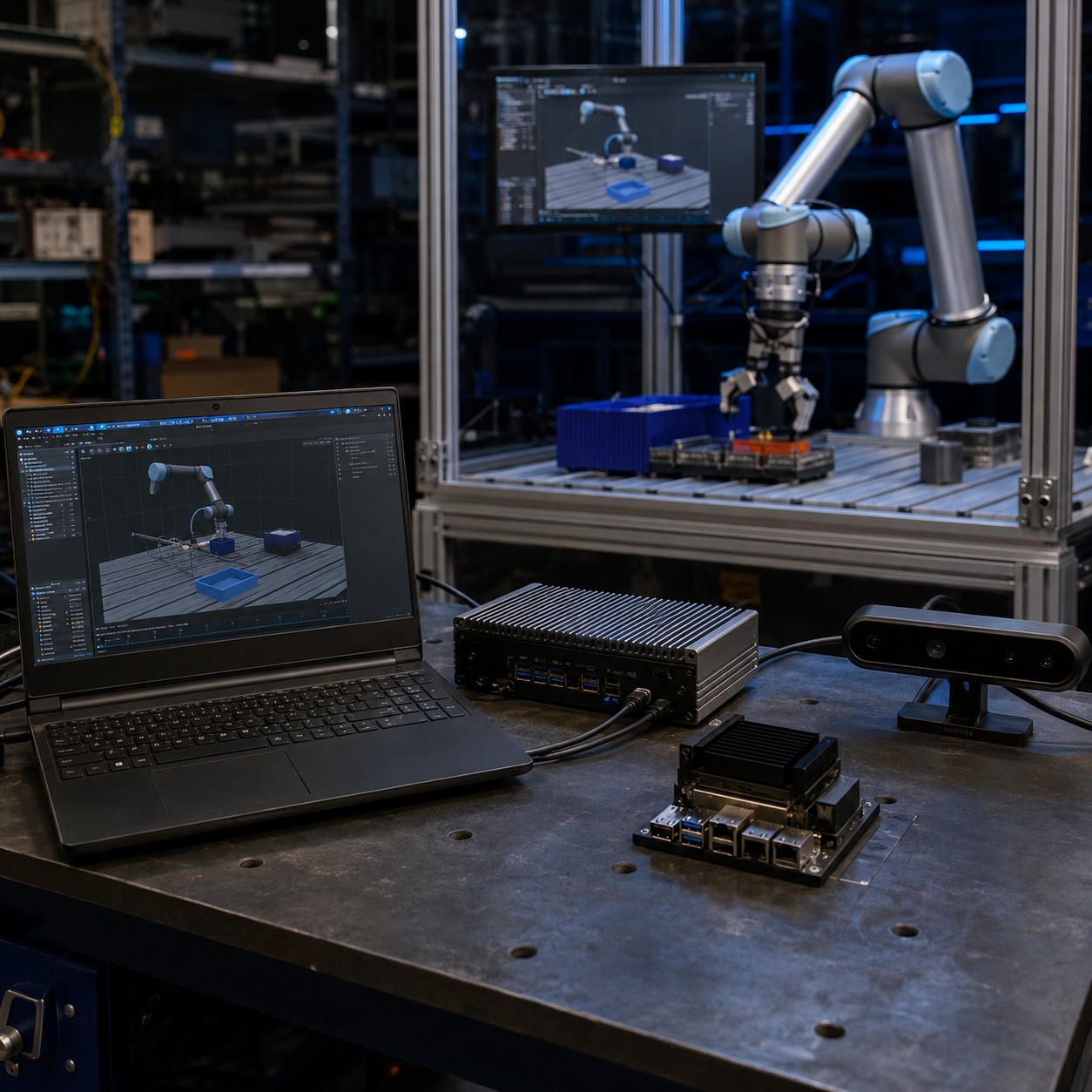
Your project works on one computer, but fails when you move it to another machine, a Jetson, or an industrial PC.
You are not blocked by robotics.
You are blocked by messy dependencies, fragile Ubuntu setups, and unclear workflows.
This course is for students, engineers, makers, and developers who want to build robotics projects in a cleaner, more professional way.
You do not need to become a DevOps expert.
You need to learn how to make your robotics environments reproducible, portable, and easier to manage.
The Transformation
After this course, Docker will stop feeling like a confusing tool and will become part of your robotics workflow.
You will stop installing random packages and hoping your system does not break.
You will learn how to build clean ROS and ROS2 environments that can be reused, moved, and rebuilt.
Your projects will become easier to manage, easier to share, and easier to deploy on another machine.
This is a key step in becoming a more serious robotics engineer:
not just writing code, but building a workflow that is reproducible, portable, and professional.